Assessments
All assessments are conducted by registered clinicians accredited by Ireland’s leading professional bodies, ensuring high-quality, reliable, and person-centred evaluations. We provide a range of private psychological assessments in Dublin, tailored to individual needs and carried out in line with HSE guidelines and recognised professional best practice standards.
Attention Deficit Hyperactivity Disorder (ADHD)
Assessment (Children and Adults)
ADHD is one of the most common pediatric neurodevelopmental disorders. It is commonly diagnosed in childhood and in some cases in adulthood. Children and adults with ADHD may have difficulty paying attention, restraining impulsive behaviours (doing without considering the consequences), or being extremely active (hyperactive), amongst other symptoms.
Signs and Symptoms
It is common to have difficulty focusing and controlling impulsive behaviours. These symptoms persist and can be severe, causing problems at school, at home, and with friends.
A person with attention deficit hyperactivity disorder (ADHD) might:
- Experience a lot of daydreaming
- Be forgetful or frequently lose things
- Squirm or fidget excessively
- Make careless mistakes
- Take unwarranted risks
- Have difficulty avoiding temptation
- Have difficulty taking turns
- Have a hard time getting along with other people
Autism Spectrum Disorder Assessment
For children and adolescents, the assessment process includes behavioural observation, developmental interviews with parents or caregivers, information from the child’s school, and evaluation of adaptive functioning. Cognitive assessment may also be conducted where appropriate and feasible. In line with HSE guidance, assessments for children and adolescents are carried out within a multidisciplinary framework.
For adults, the assessment involves a detailed clinical interview and direct behavioural observation with the individual. Collateral information may also be obtained through interviews with partners, family members, or other informants when available. Structured observational or interview-based tools may also form part of the assessment process.
Cognitive Assessment
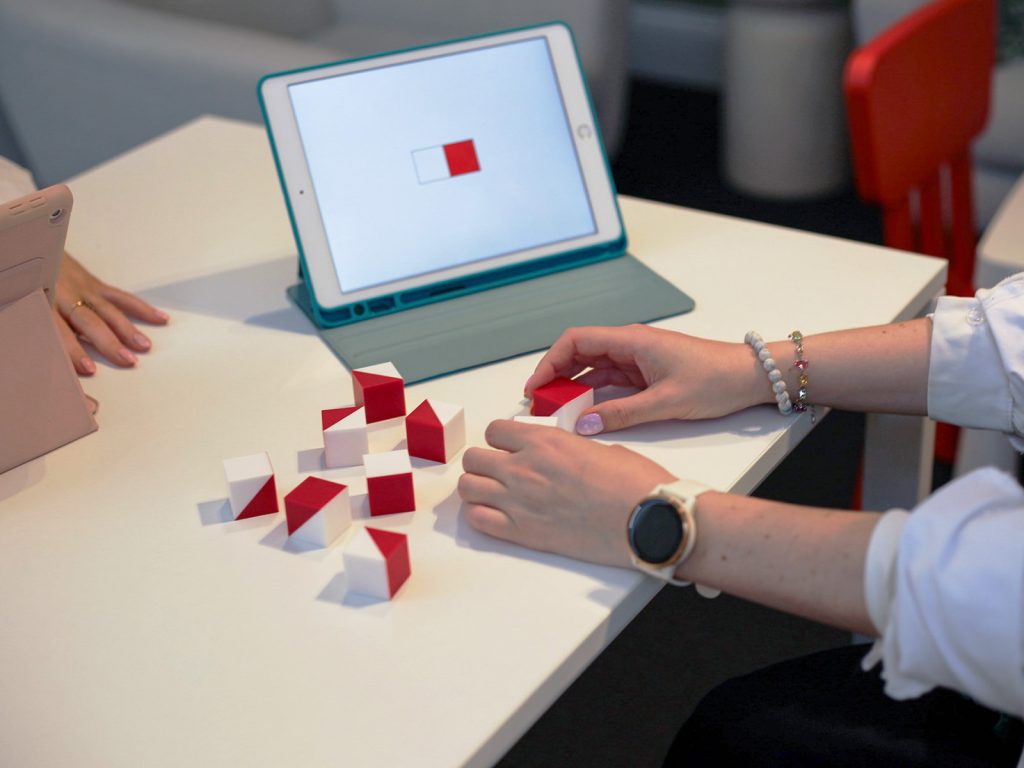
A cognitive assessment is a structured evaluation that looks at how a person thinks, learns, remembers, and processes information. While cognitive changes can occur with ageing, difficulties with memory, attention, learning, or problem-solving can affect individuals of any age – including children, adolescents, and adults.
These assessments help clarify whether challenges are related to developmental differences, learning needs, emotional factors, medical conditions, or age-related changes. Early identification can support more effective intervention, treatment planning, and educational or daily-life support.
You may benefit from a cognitive assessment if you or your child is experiencing any of the following:
• Frequent forgetfulness, such as missing appointments or struggling to recall information
• Often misplacing items or asking the same questions repeatedly
• Difficulty understanding, processing, or remembering information
• Trouble following instructions or needing to write everything down to keep track
• Challenges with learning, concentration, or problem-solving
• Getting confused, lost, or disoriented more easily than before
Cognitive assessments provide clarity and guidance, helping families and individuals understand what is happening and what supports may be helpful.
Educational/Learning Assessment (Dyslexia & Dyscalculia)
Dyslexia is a reading-related learning problem. Dyslexics have difficulty reading at a fast rate without making mistakes. They may struggle with reading comprehension, spelling, and writing as well. These difficulties, however, are not due to a lack of intelligence.
People with dyslexia often have difficulty in reading fluency. People with dyslexia frequently read slowly and commit errors in this process. This may have an impact on how well they understand what they’re reading. When other people read to them, though, they frequently understand the text without difficulty.
Dyslexia can also make it difficult to learn new skills. These are some of them:
- Reading comprehension
- Spelling
- Writing
- Math
Dyscalculia is a mathematical learning difficulty. People with dyscalculia struggle with math on a variety of levels. They frequently struggle with fundamental ideas such as greater vs. smaller. They may also struggle with simple math tasks as well as more sophisticated concepts.
How Dyscalculia Is Diagnosed
An evaluation is the only method to receive a diagnosis. This can be given to anyone at any time. Adults and children are assessed using different tests.
Neuropsychological Assessment
A neuropsychological evaluation is an evaluation of how one’s brain works, which provides information about one’s brain’s anatomical and functional integrity. An interview and a battery of tests are part of the neuropsychological evaluation. Typically, the tests are done on pencil, paper or computer-based format.
OT Assessment
Occupational Therapy (OT) assessments evaluate how a person manages everyday activities at home, school, work, and in the community. They look at areas such as motor skills, handwriting, sensory processing, organisation, independence, and overall daily functioning.
OT assessments are suitable for children and adults and help identify both strengths and areas of difficulty.
Recommendations are tailored to support skill development, confidence, and greater ease in day-to-day life.
Personality Assessment
Personality assessments explore patterns in thoughts, emotions, and behaviour to help individuals understand themselves more deeply. These assessments can clarify interpersonal strengths, typical coping styles, and areas that may benefit from support. They are often used to guide therapy, support personal development, and provide insight into emotional and relational functioning.
Psychological Assessment
Psychological evaluation consists of clinical interviews and tests conducted by a Clinical Psychologist Consultant in order to collect information about your thoughts, feelings and behaviours.
A psychological assessment includes details about your life, medical history, family, background, and symptoms to evaluate your current mental status. Upon evaluation, our senior Clinical Psychologists will determine a diagnosis and recommend the most appropriate treatment plan.
Ageing Brain and Cognitive Decline & Dementia Assessment
Ageing Brain and Cognitive Decline & Dementia Assessments are specialist evaluations that look at changes in memory, thinking skills, behaviour, and daily functioning as people get older. The aim is to understand whether these changes are part of normal ageing or whether they may be signs of cognitive decline or dementia.
These assessments help provide clarity, guide early detection, and support individuals and families in planning the right care and interventions.
Send us a message
By submitting this form, your data will be processed securely and confidentially.